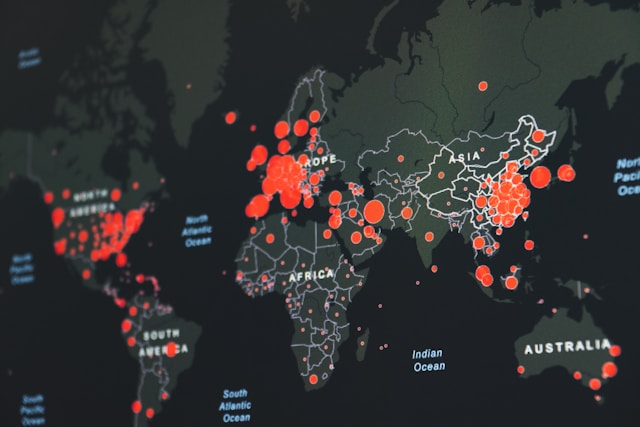
International Trade in 2026: The Shocking New Global Order
The global map of commerce is being redrawn, and for the first time in decades, “cheap” is no longer the winning metric. If you have been tracking your business overhead or watching global headlines, you have likely noticed that the old era of hyper-globalization—where parts crossed twenty borders solely for the lowest price—is effectively dead. International trade in 2026 is undergoing a structural transformation characterized by a pivot from cost-efficiency to strategic resilience. This isn’t just a minor tremor; it is a seismic shift in how value is created and moved across the planet. We are moving from a world of “just-in-time” to “just-in-case,” and the economic consequences are profound for everyone from CEOs to daily consumers.
For those navigating this landscape, the change can feel overwhelming. It’s no longer just about finding the lowest bidder; it’s about ensuring that your products actually arrive on time and through secure channels. The reality of international trade in 2026 requires a complete recalibration of how we think about supply chains, logistics, and digital commerce.
Why This Matters
The evolution of trade is not just a high-level economic concept; it affects the price of your morning coffee, the availability of your smartphone, and the stability of your local job market. Organizations that fail to adapt to these shifts—by ignoring digital capabilities or failing to diversify suppliers—will find themselves locked out of the most lucrative markets. Strategic alignment with the new rules of international trade in 2026 is now a prerequisite for professional and corporate survival. Understanding these changes allows you to position yourself ahead of the curve rather than being swept away by it.
Key takeaways:
Regionalization is replacing global dependency as nations prioritize “friend-shoring” for security.
Supply chains are being rebuilt for reliability rather than just “just-in-time” efficiency.
Digital trade and services are the fastest-growing sectors of the global economy.
Sustainability and carbon pricing have become mandatory components of trade policy.
Technological sovereignty is now a primary driver of national economic strategy.
The Rise of Regional Power Blocs
One of the most visible changes in the landscape of international trade in 2026 is the growing importance of regional partnerships. Instead of relying on vulnerable, long-distance global supply routes, countries are strengthening ties with nearby neighbors. Trade agreements within Asia, Europe, and the Americas are taking precedence as governments seek to secure access to food, technology, and energy. This is a move toward “short-cycle” manufacturing where production happens closer to the end consumer.
Regionalization shortens shipping distances, lowers carbon footprints, and reduces exposure to geopolitical flare-ups. This trend suggests that the future of trade will be defined by interconnected regional hubs rather than a single unified global system. Here’s where things get interesting: we are seeing a move away from “efficiency at any cost” toward “security at a reasonable cost.” It is a massive transition that requires rethinking every aspect of logistics and procurement.
Consider the impact on North American trade. The shift toward nearshoring in Mexico has turned the region into a manufacturing powerhouse, significantly reducing the reliance on trans-Pacific shipping. This move is not just about saving money; it’s about the security of having parts a truck-drive away rather than an ocean apart. In the new world of international trade in 2026, proximity is the ultimate hedge against volatility.
WHAT MOST ARTICLES GET WRONG
Most traditional analysis is outdated or incomplete. Many analysts suggest that trade is “shrinking” because of new tariffs and borders. That’s the part most people miss. Trade isn’t shrinking; it is changing its state of matter. While physical trade in bulky commodities faces more friction, digital exports are exploding. We are witnessing the dematerialization of commerce.
We are seeing a massive surge in “invisible exports”—software, cloud services, and remote professional consulting. According to global trade data from the World Trade Organization https://www.wto.org these services now constitute a larger share of global value than many realize. These don’t sit in shipping containers, so they aren’t captured by traditional trade metrics. The real story of international trade in 2026 is how digital platforms allow a small business in one country to sell high-value services to another without a single physical document crossing a border. If you are only looking at shipping ports to measure trade, you are missing half the picture.
Supply Chains: Built for Security, Not Just Speed
For decades, global trade prioritized efficiency and cost reduction. Companies concentrated production in locations with the lowest labor expenses. In international trade in 2026, that model has evolved toward supply chains designed for reliability. Businesses are diversifying suppliers, maintaining higher inventory levels, and establishing backup production facilities. This redundancy was once seen as “waste,” but today it is seen as “insurance.”
Strategies like nearshoring (moving production closer to the final market) and friend-shoring (trading only with politically aligned nations) are now standard practice. This shift is creating new manufacturing centers in countries that offer stable regulatory environments and modern infrastructure. The result is a more distributed global production network that reduces the risk of sudden disruptions. It’s a world where having a “Plan B” is just as important as the primary operation. The resilience of these new supply chains is the backbone of international trade in 2026.
The Digital Transformation of Logistics
The hardware of trade—ships and trucks—is now being managed by the software of trade: AI and blockchain. In international trade in 2026, the efficiency of a port is measured by its data throughput as much as its crane capacity. Digital customs processing and real-time tracking have moved from “nice-to-have” features to essential requirements for entering the global market.
AI is the backbone of modern logistics. It is used for real-time shipment tracking, automated customs processing, and AI-driven route optimization, which reduces delays and lowers fuel costs significantly. This technological integration allows for a level of transparency that was impossible a decade ago, enabling companies to track the environmental impact and labor conditions of their entire supply chain in real-time. This digital layer is what makes international trade in 2026 significantly more agile than its predecessors.
Imagine a scenario where a cargo ship hits a major storm in the Indian Ocean. In the past, this might lead to weeks of silence and delayed deliveries. In international trade in 2026, AI systems immediately reroute other vessels, adjust inventory levels in warehouses across three continents, and update customers in real-time. This level of responsiveness is the new baseline for global commerce.
Real-World Context: The Automotive Pivot
Consider the electric vehicle (EV) industry. In the past, a manufacturer might source batteries from wherever was cheapest. In international trade in 2026, due to new trade rules and environmental standards, that same manufacturer must prove that the lithium was mined responsibly and that the battery was assembled in a “compliant” region to avoid heavy carbon taxes. This real-world example shows how sustainability is no longer a “bonus” but a hard requirement for market access.
That’s the part most people miss—green policy is now a trade barrier for the unprepared. Companies like Volvo and Tesla are essentially redesigning their entire supply networks to ensure every component meets the stringent “Passport” requirements of the European and North American markets. It’s a complex dance of compliance and commerce that defines the world of international trade in 2026.
My Prediction: The Rise of Trade Intermediaries
I predict that the nations currently investing the most in digital customs and smart logistics—like Singapore, the UAE, and the Netherlands—will become the dominant trade intermediaries of the next decade. Efficiency is no longer about labor costs; it is about the speed of your data. Furthermore, the growing influence of emerging markets in Africa and Latin America is creating a more balanced global marketplace as they move from raw material exporters to producers of finished, high-value goods.
The landscape is shifting away from a unipolar world toward a multipolar system where agility is rewarded. We are entering a decade where the most successful companies will be those that treat their supply chain as a strategic asset rather than a cost center. This requires a level of investment in data and partnerships that many are still struggling to grasp as they navigate international trade in 2026.
The Expanding Role of Service-Led Trade
While we often focus on the movement of goods, the service-led component of international trade in 2026 is where the most dynamic growth is occurring. Education, healthcare, and financial services are increasingly crossing borders digitally. This allows developing nations to leverage their human capital in ways that were previously impossible.
For example, a medical imaging company in India can now provide real-time diagnostic services to clinics in rural America. This type of trade doesn’t require a single shipping container, but it requires robust digital infrastructure and clear regulatory frameworks. As we move further into international trade in 2026, the distinction between “goods” and “services” will continue to blur, creating a more integrated global economy.
Resilience as a Competitive Advantage
In this new order, resilience is not just a defensive measure; it is a competitive advantage. Companies that can withstand shocks—whether geopolitical, environmental, or technological—will be the ones that capture market share from their less prepared rivals. This requires a cultural shift within organizations to value long-term stability over short-term cost savings.
Investing in local talent and local infrastructure is no longer just a corporate social responsibility goal; it’s a core part of the business model. By building deeper roots in the regions where they operate, companies can better navigate the complexities of international trade in 2026. The era of the “rootless” global corporation is coming to an end.
Navigating the New Regulatory Landscape
The regulatory environment of international trade in 2026 is more complex than ever before. New rules on data privacy, environmental standards, and labor rights are being introduced at an accelerating pace. Companies must build sophisticated legal and compliance teams to ensure they can continue to operate across multiple jurisdictions.
This is not just about avoiding fines; it’s about maintaining the “license to operate” in a world where consumers and investors are increasingly holding companies accountable for their global footprint. Transparency is no longer optional. Every step of the product journey, from raw material extraction to final delivery, must be documented and defensible in the new world of international trade in 2026.
The Future of Trade Finance
The financial plumbing of global commerce is also being overhauled. Digital currencies and smart contracts are reducing the time and cost associated with cross-border payments. In international trade in 2026, the “Letter of Credit” is being replaced by real-time settlement systems that trigger payments automatically once a shipment is verified by IoT sensors.
This reduces risk for both buyers and sellers and opens up the global market to smaller players who previously lacked the resources to navigate complex financial systems. As these technologies become mainstream, they will further accelerate the shifts we are seeing in international trade in 2026.
Closing the Global Order Gap
While the transition to this new order is challenging, it also offers a chance to close the economic gap between nations. By focusing on regional development and digital services, emerging economies can leapfrog traditional industrial stages. The success of international trade in 2026 will ultimately be measured by its ability to create a more inclusive and stable global market.
Those who master the art of strategic resilience and digital integration will be the leaders of this new era. It’s a brave new world, and the rules of international trade in 2026 are still being written. The only constant is change.
FAQ
How is international trade in 2026 different from globalization in the 90s?
The primary difference is the shift from “cost-efficiency” to “strategic resilience.” In the 90s, the goal was to find the cheapest labor regardless of distance. In 2026, the goal is to find the most reliable partner within a stable regional or political bloc.
Is “Friend-Shoring” just another word for protectionism?
Not exactly. While it does involve favoring certain partners, it is driven by risk management rather than just protecting domestic industries. It aims to prevent supply chain collapses during geopolitical crises by ensuring partners are reliable and aligned.
What role does AI play in trade efficiency today?
AI optimizes everything from shipping routes to inventory levels. It can predict disruptions before they happen, allowing firms to reroute cargo and maintain production schedules even when traditional routes are blocked.
How do carbon taxes affect international exporters?
Carbon pricing systems mean that exporters must pay a fee if their production methods are not “green.” This effectively turns environmental sustainability into a competitive financial advantage in the global market, rewarding those with low-carbon footprints.
Will the US Dollar remain the dominant currency for trade?
While the USD is still the primary reserve currency, we are seeing a trend toward currency diversification. More bilateral agreements now allow for payments in local currencies, reducing transaction costs and dependency for participating nations.
The landscape of international trade in 2026 is defined by resilience, technology, and strategic alignment. Businesses that adapt by diversifying their partners, investing in digital capabilities, and meeting high sustainability standards will lead the next economic era. The global system is not closing down; it is evolving into a smarter, more secure, and strategically driven network. We are all participants in this new global order, and our ability to adapt to international trade in 2026 will determine our success in the years to come.
Source: https://www.wto.org