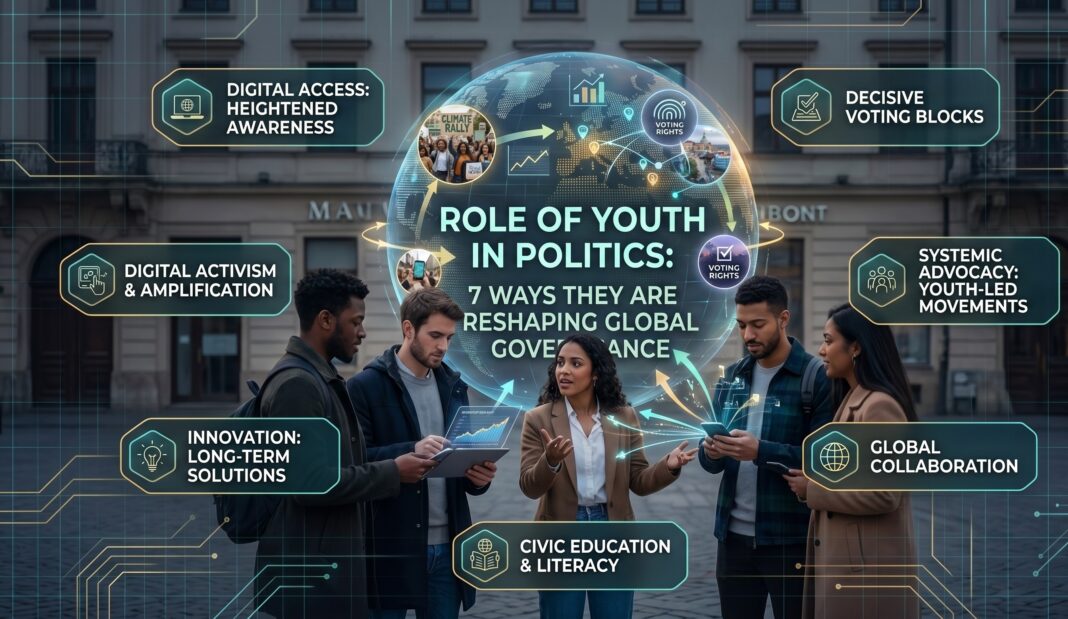
Role of Youth in Politics: 7 Ways They Are Reshaping Global Governance in 2026
Young people have become one of the most influential forces in modern political landscapes. Across the world, youth are no longer passive observers of politics; they are active participants, advocates, and leaders who are reshaping how political systems function. Their growing involvement is driven by increased access to information, rising awareness of global issues, and a strong desire to create meaningful change. As societies evolve, the role of youth in politics continues to expand, influencing policies, elections, and the direction of nations.
This is not a temporary spike in engagement; it is a fundamental reordering of civic power. If you are analyzing a political movement or an upcoming election, and you are not looking through the lens of young people, you are missing the most dynamic variable in the 2026 landscape. Understanding the evolving role of youth in politics is crucial for anyone trying to grasp where the world is heading. This article breaks down exactly how they are asserting their influence.
Key Takeaways:
The defining factor in the role of youth in politics today is the integration of digital tools with grassroots organizing.
Youth participation in elections is no longer symbolic; they have the power to swing critical outcomes in major democracies.
Education and civic literacy are the key drivers for sustaining long-term political engagement among young people.
Challenges such as lack of formal representation must be solved to fully leverage the innovative perspectives of the youth.
1. Heightened Political Awareness Through Digital Access
One of the defining characteristics of today’s youth is their heightened political awareness. Unlike previous generations, young people now have access to vast amounts of information through digital platforms, online news sources, and social media. This accessibility allows them to stay informed about local and global political developments in real time.
Why This Matters:
With this knowledge comes a deeper understanding of critical issues such as climate change, economic inequality, and human rights. This awareness has led to increased political engagement, with many young individuals actively participating in discussions and forming strong opinions on policy matters, a core aspect of the modern role of youth in politics.
2. Decisive Impact on Election Results
Youth participation in elections has become a key factor in shaping political outcomes. As a significant portion of the population, young voters have the power to influence election results when they turn out in large numbers. Candidates who fail to address their specific concerns risk losing support from this important demographic. This decisive nature of their vote is a major shift in the traditional role of youth in politics.
3. The Power of Social Media and Digital Activism
Social media has played a crucial role in amplifying the voices of young people in politics. Platforms like Instagram, TikTok, and X have become spaces where youth can organize campaigns and mobilize support for various causes.
The Strategy:
Digital activism allows young individuals to challenge political narratives and hold leaders accountable. The speed and reach of social media enable youth to connect globally, creating a sense of solidarity that strengthens the impact of youth-led initiatives, a defining trend in the role of youth in politics in 2026.
WHAT MOST ARTICLES GET WRONG
Most articles focus on protest as the primary form of youth engagement. What they get wrong is ignoring “Semantic Conversion.” Young activists in 2026 are not just demonstrating; they are translating complex legal and scientific data into accessible, shareable digital content.
This isn’t just noise; it’s a strategic effort to shift public opinion. The true power within the role of youth in politics is not the size of the crowd in the street; it is the speed at which a compelling, data-driven narrative can bypass mainstream media to influence voting patterns. Young people have become the default fact-checkers of the political process, a trend that is only accelerating.
4. Youth-Led Movements and Systemic Advocacy
Young people are increasingly at the forefront of social and political movements. From climate activism to social justice campaigns, youth-led initiatives are driving conversations and pushing for reform. These movements often bring fresh, innovative approaches to problem-solving. Their energy highlights the need for diverse voices in decision-making processes, a goal that is reshaping the conceptual role of youth in politics.
5. Innovation and Forward-Thinking Perspectives
GROWING up in a rapidly changing world, young people are often more open to innovation and willing to embrace new solutions to complex problems. Their familiarity with technology and global trends allows them to approach issues from a broader perspective. This can lead to more creative and effective policies that address modern challenges. Young leaders are also more likely to prioritize long-term sustainability over short-term gains, an essential shift driven by the evolving role of youth in politics.
6. Globalization of Political Influence
International collaboration allows young activists to share strategies, learn from each other, and amplify their impact. Global events and online platforms provide opportunities for youth to engage in discussions and influence international policies. This interconnectedness has made youth a key force in shaping not only national politics but also global agendas, proving that the role of youth in politics is now a global phenomenon.
7. Civic Education and Institutional Engagement
Higher education institutions serve as hubs for political activity. Students engage in discussions, attend events, and organize campaigns that contribute to a vibrant political culture. Civic education helps them develop critical thinking skills and understand how policies impact their lives. Addressing economic and representation challenges will help empower youth to take on leadership roles, cementing the positive future role of youth in politics.
Why This Matters
Understanding these shifts is not an academic exercise; it is an economic and civic necessity. For the political strategist, it means your current playbooks are obsolete. For the voter, it means recognizing where the true momentum for change originates. In 2026, the role of youth in politics is the defining driver of policy speed and direction. You are either working with this force or against it; there is no remaining middle ground.
Expert Prediction: The Rise of “Algorithmic Mobilization”
I predict that by 2029, the defining trend will be the rise of “Algorithmic Mobilization.” We will see youth-led movements use their own proprietary AIs to scan global policy drafts and automatically mobilize targeted digital and real-world actions faster than any traditional political party can react. This technological leverage will make the current conceptual role of youth in politics seem like ancient history.
FAQ
What is the role of youth in politics today?
It is a transformative role, characterized by active participation, digital advocacy, and the prioritization of long-term global issues like climate change over short-term political gains.
How does social media influence youth in politics?
It acts as a primary tool for organization, narrative control, and rapid mobilization, allowing young people to bypass traditional media gatekeepers to influence public opinion.
Can youth really reshape global governance?
Yes. Through global digital networks and decisive voting blocks, they are already forcing issues like climate responsibility and digital sovereignty to the top of international agendas.
What is “Semantic Conversion” in politics?
It is the skill of translating complex legal or scientific jargon into accessible, digital-first content. Young people use this to quickly fact-check and shape narratives.
Why is civic education important for young people?
It provides the foundational knowledge of how political systems work, equipping them with the critical thinking skills needed to be effective, long-term participants rather than just short-term protesters.
In conclusion, youth are playing a transformative role in shaping political landscapes around the world. Their growing awareness, active participation, and innovative approaches are influencing policies, elections, and social movements. Demographic trends and technological advancements ensure that this influence will only grow stronger. The future of global politics is being written by its youngest participants.