How Much Should You Save for an Emergency Fund? 2026 Guide
In 2026, financial stability has become more important than ever, and the primary tool for achieving it is a robust safety net. But a common question many people ask is: how much should you save for an emergency fund? An emergency fund acts as a shock absorber, protecting you from unexpected expenses, income disruptions, or sudden economic shifts. Without a clear target, you are either under-prepared for a crisis or over-saving cash that could be working for you in the market.
Understanding the purpose of this fund and determining the specific amount for your unique situation provides peace of mind and prevents the “debt spiral” that follows most life surprises. To answer how much should you save for an emergency fund, you must look beyond generic advice and calculate a figure based on your actual survival costs in today’s economy. This guide provides an authoritative roadmap to help you define, build, and protect your 2026 financial foundation.
Key Takeaways:
The standard answer to “how much should you save for an emergency fund?” is 3 to 6 months of essential living expenses.
In 2026, self-employed individuals or those in high-volatility industries should aim for 9 to 12 months of liquidity.
To calculate your target, only include “survival costs” like housing, food, and utilities—ignore discretionary lifestyle spending.
The fund must be kept in a high-yield, accessible account to ensure it remains liquid when an emergency strikes.
The 2026 Resilience Metric: Why One Size Doesn’t Fit All
In 2026, the question of how much should you save for an emergency fund is influenced by rising inflation and a shifting labor market. We are no longer in an era where a flat $1,000 is enough to cover a major repair or a month of unemployment. Today, your emergency fund must be a “living” number that reflects your current geographic and household reality.
According to 2026 financial resilience data, households with a 6-month buffer are 85% more likely to maintain their credit score during a job transition. When deciding how much should you save for an emergency fund, remember that this money isn’t an investment—it’s insurance. Its value is measured by the disasters it prevents, not the interest it earns.
1. Calculating Your “Survival Number”
The first step in answering how much should you save for an emergency fund is identifying your monthly essential expenses. This includes:
Rent or mortgage payments.
Utilities (electricity, water, internet).
Groceries and basic household supplies.
Minimum debt payments (credit cards, student loans).
Essential insurance premiums and transport costs.
2. The 3-6-9 Framework: Choosing Your Target
When people ask how much should you save for an emergency fund, the answer depends on your risk profile:
3 Months: Best for dual-income households with high job security and low debt.
6 Months: The gold standard for most families with children or a single-income stream.
9-12 Months: Essential for freelancers, business owners, or those in specialized fields where finding a new role takes longer.
WHAT MOST ARTICLES GET WRONG
Most “money experts” focus on your current salary when calculating your fund. What they get wrong is that they don’t account for “Discretionary Compression.” If you lose your job, you won’t be dining out or paying for five streaming services.
When figuring out how much should you save for an emergency fund, you should base the number on your “Austerity Budget”—not your “Current Lifestyle.” By calculating what it costs to simply survive, you can reach your savings goal 30% faster. This allows you to move your “excess” cash into high-growth investments sooner, maximizing your wealth without sacrificing your safety net. Focus on your needs, and you’ll find that how much should you save for an emergency fund is a much more achievable figure.
3. High-Yield Accessibility: Where to Store It
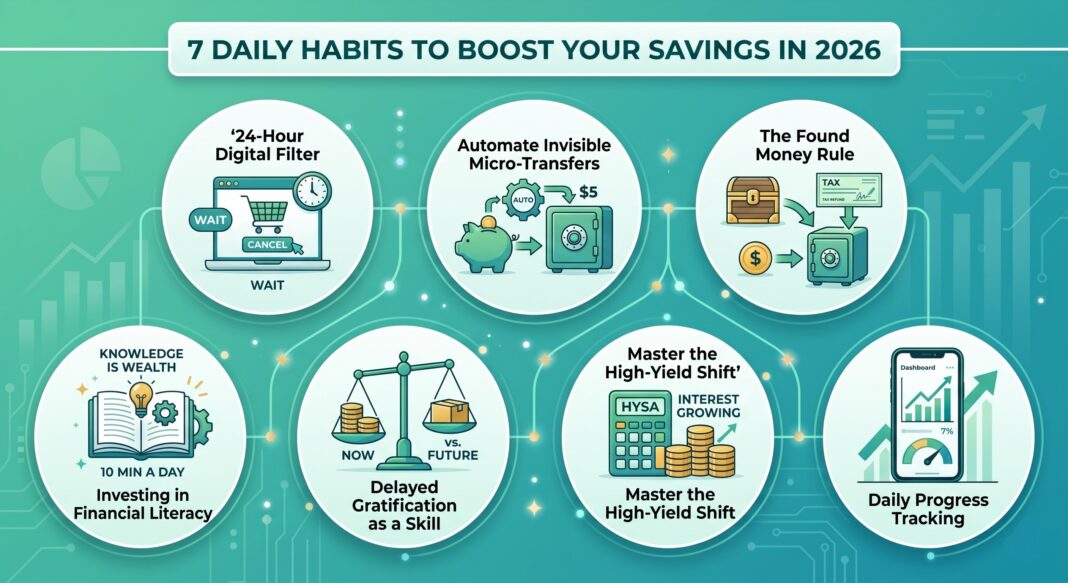
Once you know how much should you save for an emergency fund, you need a safe place to put it. In 2026, a standard checking account is a mistake due to low interest and high temptation. Move your fund to a High-Yield Savings Account (HYSA) or a Money Market Account. This keeps the money “at arm’s length”—available within 24 hours but not visible on your daily debit card balance.
4. Automating the Build-Up Phase
Building the amount you’ve determined in the “how much should you save for an emergency fund” calculation can feel daunting. Use “Micro-Automations” to bridge the gap. Set up a transfer for $50 a week or use “Round-Up” apps to invest your spare change. Consistency is the primary driver of fund growth in the 2026 digital economy.
Source: https://www.consumerfinance.gov/an-essential-guide-to-building-an-emergency-fund/
5. Identifying a “True” Emergency
The question isn’t just how much should you save for an emergency fund, but when to spend it. A true emergency is:
Unexpected: You didn’t see it coming (not a planned vacation).
Necessary: You cannot function without it (medical bills or car repairs).
Urgent: It needs to be solved now.
6. The “Refill Priority” Rule
If you tap into your fund, your #1 financial goal becomes refilling it. In 2026, many people make the mistake of continuing to invest while their safety net is depleted. Pause your “wants” spending and aggressive investing until you have reached your target amount again.
7. Re-Evaluating Your Target Annually
Life in 2026 moves fast. Your answer to how much should you save for an emergency fund at age 25 will be different than at age 35. Review your “survival number” every January or after a major life event like a raise, a move, or a new addition to the family.
Why This Matters
Mastering the question of how much should you save for an emergency fund is the ultimate act of self-care. It removes the “constant low-level hum” of financial anxiety. In 2026, your safety net is your primary defense against a changing world. It buys you the time to make calm decisions rather than desperate ones. Start your calculation today and take the first step toward true financial peace of mind.
Expert Prediction: The “Dynamic Reserve” AI
I predict that by 2028, we will see the rise of “Dynamic Reserve” AI. Your banking app will automatically calculate how much should you save for an emergency fund by analyzing local inflation and your personal spending in real-time. It will then “lock” that specific amount in a high-yield vault, automatically adjusting the buffer as your life circumstances change.
FAQ
How much should you save for an emergency fund in 2026?
For most people, the target is 3 to 6 months of essential living expenses. If your income is irregular, aim for 9 to 12 months.
Is $1,000 enough for an emergency fund?
In 2026, no. $1,000 is a great “starter goal,” but with modern costs, it rarely covers a major car repair or a month of rent. It should be treated as a milestone, not the final destination.
Where is the best place to keep an emergency fund?
A High-Yield Savings Account (HYSA) is best. It offers the perfect balance of “Liquidity” (you can get the cash fast) and “Safety” (it won’t lose value in the stock market).
Should I pay off debt or save an emergency fund first?
Save a “Starter Fund” of one month’s expenses first. This prevents you from taking on new debt when an emergency occurs while you are paying off your old debt.
How much should you save for an emergency fund if you have a stable job?
Even with a stable job, you should aim for at least 3 months. Job security can change quickly in the age of AI, and medical or home emergencies can happen to anyone regardless of employment.
In conclusion, knowing how much should you save for an emergency fund is the key to surviving and thriving in 2026. By calculating your essential costs, automating your savings, and protecting your liquidity, you can build a wall between your family and financial disaster. The future belongs to the prepared—calculate your number today.