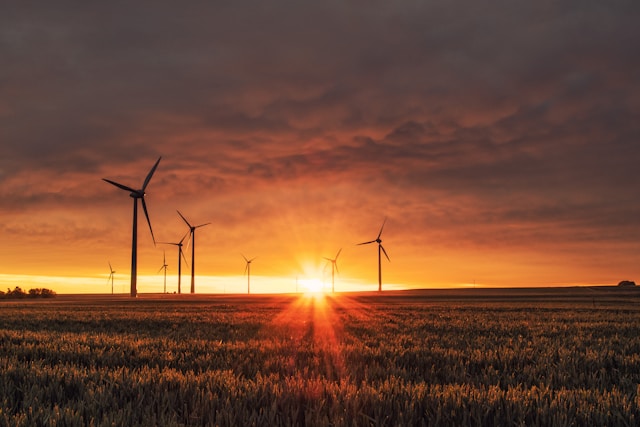
7 Carbon Reduction Breakthroughs 2026: The Green Tech Map
The global race to decarbonize has moved past the era of “ambitious targets” and into the age of “hard engineering.” In 2026, carbon reduction breakthroughs are no longer just scientific curiosities; they are the fundamental drivers of a new, high-efficiency global economy. As industries from steel to shipping grapple with the 2026 “Policy Acceleration” mandates, the focus has shifted from merely using renewables to optimizing every joule of energy through artificial intelligence and advanced chemistry.
For business leaders, investors, and climate advocates, understanding these carbon reduction breakthroughs is the only way to navigate a market where carbon intensity is now a direct financial liability. We are witnessing a “Great Execution” phase where the most successful nations are those that have bridged the gap between the lab and the utility grid. This guide provides an authoritative breakdown of the technological shifts defining the 2026 environmental landscape.
Key Takeaways:
Carbon reduction breakthroughs in 2026 are led by “Agentic AI” in smart grids, reducing energy waste by up to 22% through real-time demand orchestration.
Solid-state battery pilot runs have begun, promising a 50-80% increase in energy density and 1,000+ km ranges for long-haul electric transport.
Green hydrogen has reached a “leaner” reality, with costs dropping toward $3/kg in regions like India and Brazil due to biomass-integrated electrolysis.
Industrial CCUS (Carbon Capture, Utilization, and Storage) has achieved 90% recovery rates in steel and cement plants through advanced amine-based absorption.
The 2026 Inflection: From Hype to ROI
In 2026, the climate tech sector has undergone a “Discipline Correction.” Investors are no longer funding vague “moonshots”; they are demanding measurable carbon reduction breakthroughs with clear paths to scale. According to the IEA’s latest strategic report, energy demand—driven by the AI and data center explosion—has become the defining constraint of the energy transition.
This shift in carbon reduction breakthroughs focus means that efficiency is now as valuable as generation. We are moving toward a “Digital-Physical” blend where the internet of things (IoT) acts as the nervous system for a decentralized, carbon-neutral power grid.
1. Grid-Scale Storage: The Solid-State Milestone
Intermittency has long been the Achilles’ heel of wind and solar. However, one of the major carbon reduction breakthroughs of 2026 is the emergence of solid-state and semi-solid batteries for grid-scale use. With energy densities reaching 500 Wh/kg, these batteries allow utilities to store days—not just hours—of renewable energy.
Why This Matters:
Solid-state technology eliminates the flammable liquid electrolytes of traditional lithium-ion cells. This makes them significantly safer for massive urban battery installations, enabling “Energy Resilience” in high-density cities without the risk of thermal runaway.
2. Industrial CCUS: Decarbonizing the “Hard-to-Abate”
Heavy industries like cement and steel production represent 10% of global potential for process emission capture. In 2026, carbon reduction breakthroughs in post-combustion capture have reached 85-95% CO₂ recovery rates. Captured carbon is now being carbonated directly into concrete or used as a feedstock for synthetic aviation fuel (SAF).
Realistic Example:
India’s February 2026 budget allocated ₹20,000 crore specifically for industrial CCUS deployment. A steel plant in the region now integrates hydrogen-based direct reduction with carbon capture, achieving a 70% reduction in its total carbon footprint. This illustrates the direct carbon reduction breakthroughs impact on legacy heavy industry.
3. Green Hydrogen: The “Industrial Feedstock” Pivot
The hype around hydrogen has settled into a “functional economy.” In 2026, the most significant carbon reduction breakthroughs in hydrogen are found in replacing “grey” (fossil-based) hydrogen in refineries and ammonia production.
Alkaline (ALK) Electrolyzers: Dominating the market with 3GW+ scales in China.
Biomass sugars: Innovative R&D has enabled waste-based electrolysis, potentially slashing costs by 50% compared to 2024 levels.
WHAT MOST PEOPLE OVERLOOK
Most analysts focus on “Generating” clean energy. What they get wrong is ignoring the “Demand-Side AI.” In 2026, the most effective carbon reduction breakthroughs aren’t found in a new solar cell, but in the AI algorithms managing the “Electrification Shock.”
With data centers consuming massive amounts of power for AI training, the real breakthrough is “Predictive Load Balancing.” AI now “now-casts” solar irradiance using satellite imagery to schedule energy-intensive computing tasks when renewable output is at its peak. This “Computational-Energy Symbiosis” is the silent engine of the 2026 green transition.
4. Smart Grids and the “Digital Twin” Revolution
Grid management has moved from manual oversight to “Digital Twin” replicas. By using AI-driven twins, utilities can simulate behavior and test new ideas in a virtual environment before deployment. This branch of carbon reduction breakthroughs has led to 22% yield gains in hybrid installations like agrivoltaics (solar + agriculture).
5. Precision Agriculture: Lowering Nitrous Oxide
While CO₂ gets the headlines, Nitrous Oxide (N₂O) is nearly 300 times more potent. A January 2026 synthesis in Nature confirmed that carbon reduction breakthroughs in precision farming—using autonomous tractors and variable-rate fertilizer tools—can decrease fertilizer use by 36%–60%. This directly slashes the agricultural sector’s most potent greenhouse gas emissions.
6. Sustainable Architecture: The “Breathable” Façade
The most sustainable building in 2026 is the one that was never built—or the one that breathes. Adaptive reuse of existing structures has become a mandatory carbon reduction breakthroughs strategy in cities like Detroit and London.
For new builds, “Climate-Responsive” design is the standard. Automated bronze louvers on “breathable” façades open and close to provide natural ventilation, reducing mechanical cooling needs by 35%.
Source: https://www.iea.org/reports/world-energy-outlook-2026
7. The Circular Supply Chain: Localization as a Metric
One trend with fascinating long-term implications is the “Localization of Manufacturing.” By moving production hubs closer to consumer bases—incentivized by the US Inflation Reduction Act and the EU’s Net-Zero Industry Act—companies are achieving massive carbon reduction breakthroughs by eliminating thousands of miles of maritime shipping.
Why This Matters
The shift toward these carbon reduction breakthroughs is the only path to “ROI & Resilience” in a climate-volatile world. For the business owner, it means that “efficiency” is no longer a buzzword—it is the only way to protect your margins from rising carbon taxes. For the global community, these breakthroughs represent the “Year of Execution,” where we finally move from talking about the future to building it.
Expert Prediction: The Rise of “Energy-as-a-Proxy”
I predict that by 2028, the defining characteristic of carbon reduction breakthroughs will be “Energy-Sovereign Computing.” We will see the first major AI data centers built with their own integrated Small Modular Reactors (SMRs). This will decouple the digital economy from the public grid, effectively making carbon-free energy the primary “proxy” for a nation’s total computing power and economic influence.
FAQ
What are the biggest carbon reduction breakthroughs to watch in 2026?
The top three are Solid-State Batteries for long-range storage, AI-driven Smart Grid optimization, and the scale-up of Industrial Carbon Capture (CCUS) in cement and steel.
How does AI help in carbon reduction breakthroughs?
AI acts as the “Intelligent Backbone.” It forecasts PV output using satellite data, optimizes irrigation in precision farming, and manages the “Electrification Shock” from data centers to prevent grid crashes.
Is green hydrogen affordable yet in 2026?
It is becoming competitive. Thanks to economies of scale and biomass-integrated production, green hydrogen costs are falling toward $2-3/kg in regions with high renewable availability, making it a viable lever for industrial transformation.
What is “Value-Engineering” in sustainable construction?
It involves using AI to predict exact material quantities and quantifying “embodied carbon” in materials before a project starts. This prevents over-ordering and ensures that the building’s carbon footprint is minimized from day one.
Does precision agriculture really reduce greenhouse gases?
Yes. By using sensors and drones to apply fertilizer only where needed, farms are reducing nitrous oxide emissions (which are 300x more potent than CO₂) by up to 60%.
In conclusion, the carbon reduction breakthroughs of 2026 are transforming the climate crisis from a threat into an engineering challenge. By embracing solid-state storage, industrial CCUS, and AI-driven efficiency, we are building a future that is not just cleaner, but smarter and more resilient. The era of experimentation is over; the era of execution is here.